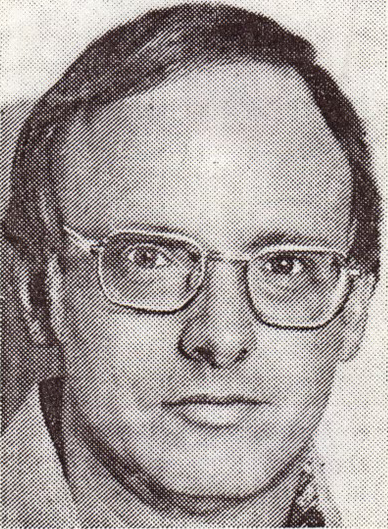
A great deal has been both spoken and written about the University of Colorado
UFO study, some of which makes sense, some of which does not. The typical person remains confused. Was the Project
a valid scientific effort or a gigantic hoax? Did those involved really try to solve the problem, or did they merely
go through the motions? Who was right in the controversy between Dr.
Condon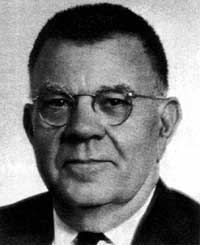 on the one hand and Saunders
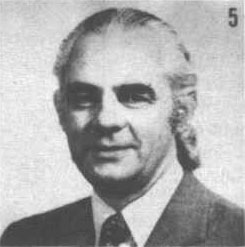 and Norman E. Levine
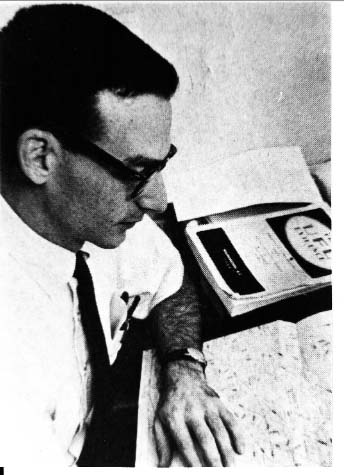 on the other? In real life the answers to such questions are never simple,
nor are they here. Nevertheless, in the hope that I may succeed in better defining the issues, I hereby offer my own
experience in and opinions about the UFO Project.
on the other? In real life the answers to such questions are never simple,
nor are they here. Nevertheless, in the hope that I may succeed in better defining the issues, I hereby offer my own
experience in and opinions about the UFO Project.
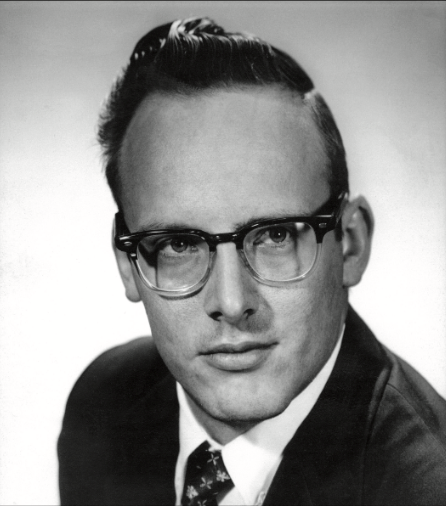
I became a member of the UFO Project in the early summer of — months after the firing of Saunders and Levine—in response to a call for help. The Project had
let a contract to the Stanford Research Institute to prepare a report on
“Radar and the Observation of UFOs.” Dr. Condon and some of the other staff members
believed that this report would contain an evaluation of actual UFO cases, but a preliminary draft of the report had
been received that contained no such analysis, for the very good reason that the contract did not call for it (the
results of the Stanford contract appear in the final report as Chapter 5
of Section VI, titled simply “Radar”). Apparently there had been a breakdown in communications somewhere.
Now Condon needed someone to bail him out. He turned to Dr. C. Gordon Little,
Director of the Wave Propagation Laboratory of what was then the Environmental Science Services Administration (ESSA),
a part of the Department of Commerce. Dr. Little had earlier turned down the same Air
Force contract that Condon was then working under, reportedly saying that it would be “a
disaster” (I later told Dr. Little that he was quoted as having said that; he laughed and
said, “Did I say that?”—I got the distinct impression that he still felt the same way). This time, however, he was
willing to supply some personnel to help out, provided that they did so as employees of the University and not of
ESSA. He then called my boss, Dr. Bradford R. Bean, who in turn offered the job to me.
After some deliberation I decided to accept, telling Dr. Bean that notoriety is better
than obscurity.
In retrospect, I believe my comment here was probably misunderstood. I used the word “notoriety” in the sense of “notorious” rather than “famous.” I half expected that I might accumulate some negative notoriety from having worked on the UFO Project, but I felt that even such adverse publicity would be more advantageous than remaining completely unheard of. Whether or not I ever achieved any kind of notoriety from participating in this project is debatable. The grand total of results, aside from an invited paper in Astronautics & Aeronautics, about which more later, was an interview published in the , issue of the National Inside the Colorado UFO Project Enquirer—if that is not notorious, what is?—and a listing in Marquis Who’s Who in the West for 1976–1977. But I digress.
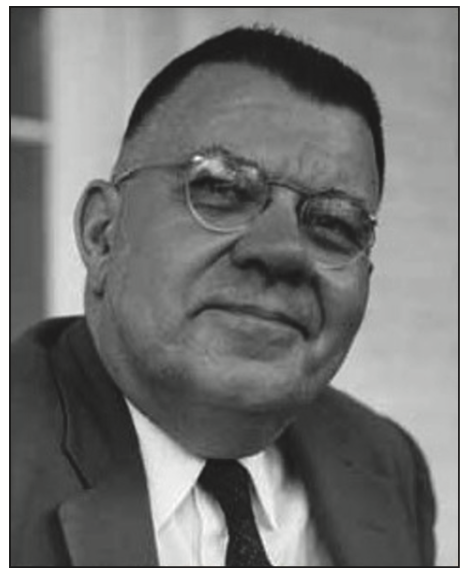 , 1902–1974
I first met Dr. Condon when he interviewed me prior to hiring me to work on the UFO
Project. Then 66 years old, Condon struck me as a rather phlegmatic individual. Rather
heavyset, with short hair and hornrimmed glasses, he reminded me somehow of Charles Laughton, the Hollywood actor.
Although he was usually laconic, he could on occasion become rather garrulous. He struck me as guarded, as though he
did not want anyone to know who he really was. As I was to discover later, he may have had good reason to behave in
this manner. Nevertheless, he and I struck it off fairly well, and before the interview was over he assured me that I
would be hired for the UFO Project as a consultant, on leave from ESSA. Condon also said I would be allowed to bring
along a co-worker to help me with my work, who would also be hired by the Project.
A few days later a meteorologist who worked for me at the time—Burgette “Scotty” Hart—and I were given leave without
pay from ESSA and hired as consultants to the UFO project. Our assignment was to evaluate a group of the best
radar-visual UFO cases in the Project files to see how many of them could reasonably be attributed to anomalous
propagation effects. Note that this contrasts with Dr. James E. McDonald’s statement, made
to John G. Fuller during the course of the UFO project, that Condon’s disposition was to concentrate on the
nut-and-kook cases at the expense of the serious evidence…
. This may have been true of Condon personally, but he asked me to examine
only the most credible cases. I believe that he felt all UFO cases were “kooky,” and therefore the best way to shoot
down the whole mess was to concentrate on the “best” cases.
Before I go on, I should point out that at no time during my work with the UFO Project was pressure of any kind brought to bear either on me or on Mrs. Hart. In the preparation of my chapter in the final report, including the conclusions thereof, I called all the shots. Chapter 5, Section III, of the final report appears, with two minor but significant exceptions that I shall describe presently, exactly as I wrote it.
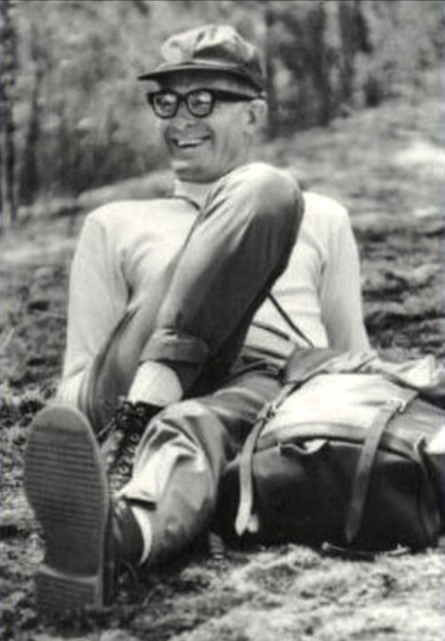
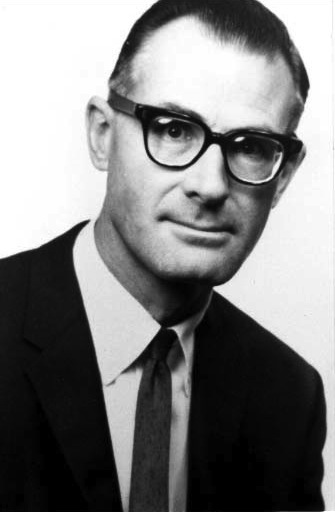 in
in And so it was that in early I found myself—with Mrs. Hart as a very
capable assistant—a member of the University of Colorado UFO Project. I worked in the same room with Dr. Roy Craig, a
full-time Project staff member as well a competent physical chemist and—for me— an invaluable source of information on
the inner workings of the Project. Roy was a tall, slender, well-built man with dark hair. Although the photo of Dr.
Craig taken by Life magazine photographer Gerald Brimacombe
in
shows him wearing heavy horn-rimmed glasses, he normally did not wear glasses when working indoors.
He struck me as an intelligent, friendly person, and we had many interesting conversations while working together on
the Colorado UFO Project.
Roy Craig had a mind like the proverbial steel trap and was a stickler for details. For
example, he was careful to point out to me that the Air Force’s Project
Bluebook Officer at that time, Major Hector Quintanilla Jr., did not pronounce his name as “keen-tuh-knee-yuh”
in the usual Hispanic manner but rather had Angli- cized it to “kwin-tuh-nilla” (rhyming with “vanilla”). He offered
the opinion that knowing this could prove useful should I ever chance to meet the man. Roy also had a strong
inclination to be evenhanded in all matters and was always quick to give an opposing viewpoint if no one else offered
one.
After a number of talks with Roy together with observations of my own, I came to the conclusion that Condon’s
direction of the UFO Project was rather loose. It appeared to me that Condon viewed the
Project as a great ship headed inexorably toward a destination which he as captain could clearly see, with only an
occasional order barked to the helmsman needed to keep her on course. During the time I worked on the Project I was to
find ample confirmation of this picture.
In my second week there, I discovered the Lakenheath
case in the files (see Section III, Chapter 5, pp. 163-4, and Section IV, Chapter 1, pp. 248-256, of Scientific Study of Unidentified
Flying Objects, Dr. Edward U. Condon, Project Director, Daniel S. Gillmor, Editor; New
York: Bantam Books, 1969). At that time the file consisted only of a letter written to the UFO Project by Forrest D.
Perkins n2Forrest Perkins’s name was carefully omitted from documentation about the Lakenheath case to protect his
privacy. However, he has since died (on ), so it is no longer necessary to omit his name.,
who had been the watch supervisor at Lakenheath on the night in question. A few days after I found this letter there
was a general Project staff meeting chaired by Dr. Condon (the only one I can remember
while I was there). During this meeting Condon asked me if I had turned up anything
significant. I replied that I had and related the events at Lakenheath as reported by Perkins. To my surprise Condon appeared very disconcerted. Just then Roy Craig—always the
one to have both sides heard—pointed out that this report came from an unsupported letter written some twelve years
after the event. Instantly Condon relaxed. In that case,
he growled, I think we
should publish it as an example
of the sort of rubbish we get from people.
Frankly, I was shocked to hear such words coming from a renowned
scientist like Dr. Condon. I tried not to look as nonplused as I was by his remark.
As it turned out, it was a good thing that we did nothing of the sort. When we finally got copies of the official Bluebook files on the Lakenheath UFO case, they supported the letter we had received from Perkins in all major details. This episode revealed a great deal about Condon’s approach to the UFO question.
Obtaining the Blue Book files on the Lakenheath case makes an
interesting story in its own right. After discovering the letter from Forrest Perkins in the case files, I asked Roy
Craig why there was no Blue Book report on the incident in the Project files. When Roy checked the correspondence
files, he discovered that Bob Lowe had sent a request for the files to Hector Quintanilla
at Project Blue Book on , but nothing had ever been received from Blue Book on the case. Roy
then submitted a second request. This time Quintanilla sent
us a small file on the case
titled “IR-1-56,” which we received in . This brief report proved almost useless. We then
submitted a third request for the Blue Book case files on the Lakenheath incident. The complete file, which included a
document titled “BOI-485,” was received by the UFO Project in mid-—almost too late to be of any
use (my draft chapter already had been submitted by then). The case files from Blue Book included a notation by Hector Quintanilla, Jr., that the formerly “Secret” documents had been declassified under
the authority of AFR 205-1 para 2-176 (ii)
on . Bob Low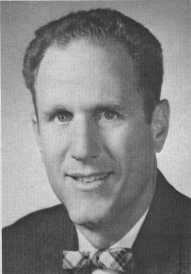 e’s
first request for the case files dated “3-6-68” was stapled to BOI-485. I suspected stonewalling by Blue Book’s Quintanilla, but Roy pooh-poohed the idea, saying
that it was probably coincidence. Perhaps it was, but the timing was certainly close enough to appear suspicious.
e’s
first request for the case files dated “3-6-68” was stapled to BOI-485. I suspected stonewalling by Blue Book’s Quintanilla, but Roy pooh-poohed the idea, saying
that it was probably coincidence. Perhaps it was, but the timing was certainly close enough to appear suspicious.
Other than this fiasco, little of significance happened between that single staff meeting and the submission of my draft chapter for the final report. I worked seven weeks full time (Mrs. Hart, about half that), at the end of which I submitted the draft of my chapter. During that time I had screened about 100 UFO reports and selected 35 for inclusion in the report (Chapter 5: Optical and Radar Analysis of Field Cases), most of them rated high in both credibility and “strangeness.” Rather surprisingly, seven of these cases—fully 20 percent of the total—had resisted my best attempts at explanation and remained “unidentified.” For the next several months I visited the Project sporadically on my own time, doing most of my revisions and editing at night.
When I received my draft chapter back from the typist, I noticed something rather strange. Everywhere that I had
written “a UFO” the typist had rendered it as “an UFO.” This seemed senseless. I mentioned it to Roy Craig, and he
told me that it had been done on Dr. Condon’s express orders. Astonished, I asked him why.
Roy, grinning broadly, replied, “He insists it must be pronounced ‘oofo’ because it rhymes with ‘goofy.’” Dr. Condon took pains to point out this rather peculiar pronunciation of UFO on page nine of his
summary in the final report, although he understandably avoided mentioning his reason for it. I should add that
Condon’s view on this point was not shared by any of the other Project members. Telephones there were routinely
answered, “You-foe Project.” I have never heard anyone else pronounce UFO as “oo-foe.”
Not long after this episode another strange thing happened. The Lakenheath case had to be written up in the Case
Studies section of the report, and I had been selected to do the writing. When I received the type-up of my draft of
this, I discovered that all the place names had been deleted and code letters (A, B, C, etc.) had been substituted for
them. Once more I turned to Roy Craig to find out what was going on. Again, he told me that it was done at Dr.
Condon’s direction, “to prevent nuts from using the Project cases for their own analyses.” I no longer recall whether
Roy actually heard Condon say this or whether it was his own deduction. In either case, subsequent events showed that
Roy was correct. Yet despite Condon’s dictum, the place names in my chapter (">Section III, Chapter 5) together with the place names on the map that
goes with the Laken- heath case in Section IV, Chapter 1, somehow “slipped through.” The last time I saw Dr. Condon
was in early . He was in his office in the JILA (Joint Institute for Laboratory Astrophysics) Tower
on the campus of the University of Colorado at Boulder, busy deleting these place names from the Bantam edition copy
that was to be used as a “master” by Dutton for their hardcover edition, which I have never seen. It might be of
interest to the reader to compare the Bantam and Dutton editions of the final report in this respect.
An electronic version of the so-called Condon Report has been published on-line by NCAS (the National Capital Area
Skeptics), dated , with the permission of the Regents of the University of Colorado. It is based on
the original report as submitted to the Air Force in 1968,
and was obtained from the “University of Colorado
Library System.” This version includes all of the place names that Dr. Condon so carefully
removed from the copy that was used by Dutton for their hardcover edition of the report. n3The NCAS publication of the Condon Report is at the URL http://www.ncas.org/condon/
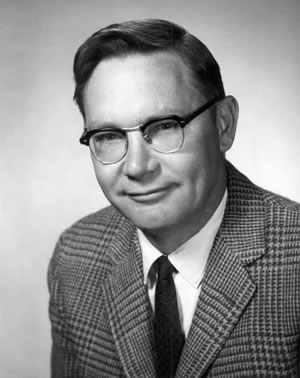
In retrospect, I am convinced that when Condon said nuts
, he had in mind primarily the late Dr. James E. McDonald, who was then an atmospheric physicist at the University of Arizona and an
outspoken advocate of the theory that UFOs are of extraterrestrial origin. My experience was that McDonald’s name
could not be mentioned in Condon’s presence without upsetting him.
James McDonald was certainly a controversial figure, especially after he testified
before Congress in , stating that UFOs are entirely real
and possibly are
extraterrestrial devices.
A tall man, tending to be both dominating and abrasive, his oddly high-pitched
speaking voice was incongruous with the rest of James E. McDonald his demeanor. He was,
however, a brilliant thinker and could analyze accurately the work of other scientists. Nevertheless, his obvious
bias on the UFO question often seemed to lead him astray.
The antagonism between Condon and McDonald is borne out by
the following incident.
In , about two years after working on the UFO Project, I was asked by Dr. Joachim P. Kuettner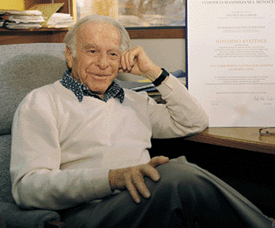 , who was at that time chairman of the UFO Subcommittee of the American Institute of Aeronautics and Astronautics (AIAA), to write up the
Lakenheath case for the AIAA Journal n4My article on the Lakenheath case appeared as “UFO Encounter
II” in the issue of Astronautics & Aeronautics. “UFO Encounter I” was written by Dr. McDonald (on the same incident treated as case 103-b on pages 148-150 of the Bantam
version of the Condon Report) and appeared in the issue of the same journal. The last time I
looked at copies of these issues, in the library of New Mexico State University about , both articles had
been razor-bladed out. Notoriety at last?. Dr. Kuettner was also an employee of
ESSA at the time. We met in his office, which was in the same building where I worked. I found him to be a small,
wiry, and very energetic man, with a good sense of humor. Despite a noticeable German accent he was easy to talk to
and came across as an intelligent and effective scientist n5Born Joachim Küttner in Germany, he earned a PhD in and worked at Peenemünde under von Braun.
He changed the spelling of his surname to Kuettner upon immigrating to America after the war.
We liked each other right away, and I quickly agreed to do the article for the AIAA Journal.
, who was at that time chairman of the UFO Subcommittee of the American Institute of Aeronautics and Astronautics (AIAA), to write up the
Lakenheath case for the AIAA Journal n4My article on the Lakenheath case appeared as “UFO Encounter
II” in the issue of Astronautics & Aeronautics. “UFO Encounter I” was written by Dr. McDonald (on the same incident treated as case 103-b on pages 148-150 of the Bantam
version of the Condon Report) and appeared in the issue of the same journal. The last time I
looked at copies of these issues, in the library of New Mexico State University about , both articles had
been razor-bladed out. Notoriety at last?. Dr. Kuettner was also an employee of
ESSA at the time. We met in his office, which was in the same building where I worked. I found him to be a small,
wiry, and very energetic man, with a good sense of humor. Despite a noticeable German accent he was easy to talk to
and came across as an intelligent and effective scientist n5Born Joachim Küttner in Germany, he earned a PhD in and worked at Peenemünde under von Braun.
He changed the spelling of his surname to Kuettner upon immigrating to America after the war.
We liked each other right away, and I quickly agreed to do the article for the AIAA Journal.
I called Dr. Condon later that night to ask his permission for access to the UFO case
files, which had been put in the Norlin Library of the University of Colorado after the disbanding of the UFO
Project. I was stunned when he told me, They’re gone—I burned the damned things!
I no longer recall what
reason he gave, but I was soon to discover what the real reason was. With the advantage of hindsight, I am now
positive that Condon realized full well that whatever he told me that night would get back to McDonald.
The next day when I told Dr. Kuettner what had happened, he suggested that we ask Jim McDonald for the loan of his copy of the Lakenheath file (Dr. McDonald had obtained
permission from the Air Force to make copies of files in the Bluebook
archives; he had copied the Lakenheath file, among a number of others). Since Kuettner
was acquainted with McDonald, he agreed to do the talking on the phone. He placed the call, told Jim what we
wanted, but when he told him what Condon said he had done with the Project files,
McDonald exploded. Kuettner winced, and I could not bear to listen. He refused to send us the file, saying among
other things that he had been “underwhelmed” by my work on UFOs. Kuettner and I both
laughed when he relayed this comment to me; neither of us had ever heard the word “underwhelmed” before, and there
is a good chance that McDonald may have coined it on the spot (it is now in fairly common usage). Afterwards, Kuettner suggested waiting for McDonald to cool off and change his mind. He also said that
he did not understand McDonald’s criticism of my work on UFOs, since I had, as he put it, “bent over backwards” to
find conventional explanations for my cases yet still ended up with twenty percent of my cases unidentified.
Later—just as Dr. Kuettner had predicted—McDonald relented, called him back, and said
that he would send a copy of the file for my use. He also explained why he had gotten so angry. He said that some
time previously, he had asked Condon for permission to look through the Project case files, and Condon had told him
that he would need to get permission from the Air Force. This proved difficult. Eventually, he did get the Air
Force’s permission, and armed with a letter to this effect he showed up at Norlin Library to have a look at the
files, only to be told by the librarian that Dr. Condon himself had come over to the
library a few days earlier and removed the files in their entirety. Defeated, he returned to Tucson only to have
Kuettner call him now to say that Condon had destroyed the
files. It must have been quite apparent to McDonald that Condon had done these things
simply to frustrate him. Dr. McDonald sent me a copy of his Lakenheath file on , including a
brief transmittal note in which he wrote in part:
As I told Dr. Kuettner
s/s Jim / JEMcDonald
As an ironic footnote to this whole sorry affair, I found out about five years later that Condon was lying when he said he had burned the Project files. The UFO Project case files had been stored in the archives of the American Philosophical Society in Philadelphia, Pennsylvania, where I believe they remain today.
Sadly, Dr. McDonald lived only four months after sending me a copy of the Lakenheath Blue Book case files. Despondent over family affairs, Jim shot himself to death in the desert near his Tucscon, Arizona, home on . He was just 51 years old.
However, these events may be viewed by the reader, it should be obvious by now that Dr. Condon was not objective about UFOs, and objectivity is indispensable to good science.
Nevertheless, one man does not make a project even if he is the scientific director. Of the thirty-six staff members
(other than myself) listed in Appendix X of the Condon
Report, I was acquainted with fourteen, nine of them from my Project experience and five of them
professionally, outside of the UFO Project. In my judgment all of them were competent workers in their field, and
all of them—with the two exceptions of Dr. Condon and Bob Lowe (of the infamous “trick” memorandum)—did their level best to render a
just and objective evaluation of the data available. Based on the contents of the final report, I have no reason to
doubt the competence or objectivity of any of the others whom I do not know personally.
The final report itself—the so-called Condon Report—stands or falls on its own merits. I believe that on the whole, and considering the resources and time available for its preparation, it is a commendable product. Aside from the introduction by Walter Sullivan (in the published versions) and the first two sections by Dr. Condon, which in my opinion are either trivia or nonsense, the report does represent the results of a scientific study. In particular, the “conclusions and recommendations” and summary sections by Condon bear so little resemblance to the contents of the report (as others before me have pointed out) that the reader who wishes to study the results of the UFO Project would do well to skip them entirely.
Yet despite this the Condon Report settled nothing. Neither positive nor negative results were obtained. Should it have settled the question? I believe not. In the first place, the amount of the contract—originally $313,000—was pitifully inadequate. In 1966, this amount was roughly the same as the total annual budget of the small research group in which I normally worked. Had I been in Dr. Bean’s position, there is no way that I would have undertaken a task of that magnitude on a contract amounting to little more than one year’s budget. Even the final amount of the contract after the inevitable extensions—over $500,000—was still far too small. In terms of the realities of scientific research, trying to solve the UFO problem with a contract for a mere $500,000 is something like dumping a bucket of water into the ocean and then trying to measure the rise in sea level.
In the second place, I am not at all sure that any amount of money would be sufficient to resolve the question. Of course, if the result is negative, proof is impossible. But even to demonstrate the probability of a result—positive or negative—is here a task of truly enormous proportions. As I once remarked to Roy Craig, it is like searching through dozens of haystacks, one of which may contain a needle. Even a budget of, say, twenty million dollars might well be tantamount to throwing away the money, but nothing much less than that would have any real possibility of success. And one can well imagine how difficult it would be to find a sponsor for such a project.
The UFO Project has been history for some four decades now. The principal protagonist, Dr. Condon,
and the principal antagonist, Dr. McDonald (or should it be the other way around?), are both dead and gone. The song
is over, does the melody linger on?