Fort, Charles: Publisher New York, Copyright 1919, Horace Liveright, Inc. 1ʳᵉ édition, décembre 1919. 2de édition, février 1920. 3ᵉ édition, février 1931. Imprimé aux USA., 1919
A l'automne 1883, et durant des années après, occurred brilliant-colored sunsets, such as had never been
seen before, within the memory of all observers. Also there were blue moons.
Je pense that one is likely to smile incredulously at the notion of blue moons. Nevertheless they were as common as
were green suns in 1883.
La science dut expliquer ces unconventionalities. Des publications comme Nature et Knowledge
furent assiégées de demandes s1"The green Sun in India," and, "Great sunspots and Sun blue." Knowledge, 4 (October 19,
1883): 247-8. "The green sun in India." Knowledge, 4 (November 9, 1883): 293. "Strange
phenomenon." Knowledge, 4 (November 23, 1883): 322. R. Wade Jenkins. "Green Sun and sound
waves from Krakatoa." Knowledge, 4 (November 23, 1883): 323. William Noble. "A strange
phenomenon ― Jupiter's satellites." Knowledge, 4 (November 30, 1883): 337-8. M. Carey-Hobson. "Strange phenomenon." Knowledge, 4 (November 30, 1883): 338. "The extraordinary
sunsets." Knowledge, 4 (December 14, 1883): 364-5. Arthur Severn. "Lunar shadows ― Strange
sunrise and sunset effects in Lancashire." Knowledge, 4 (December 14, 1883): 365. H.L. "The
eruption in the Sunda Straits." Knowledge, 4 (December 14, 1883): 365. "Great sea wave." Knowledge, 4 (December 14, 1883): 365. H.L. "The eruption in the Sunda Straits." Knowledge, (December 14, 1883): 365. W. Jerome Harrison. "A blue Moon." Knowledge, 4 (December 21,
1883): 380. Edward A. Martin. "Strange sunsets and blue Moon." Knowledge, 4 (December 21,
1883): 380. James B. Findlay. "Strange sunset." Knowledge, 4 (December 21, 1883): 380. Thos.
Radmore. "Strange sunsets." Knowledge, 4 (December 28, 1883): 395-6. John A. Stewart.
"Shower of perch ― Sunsets." Knowledge, 4 (December 28, 1883): 396. Isaac W. Ward.
"Variable and red stars in Cygnus ― Double stars in Taurus and Orion ― Saturn ― Pons-Brooks'
Comet ― The remarkable sunsets." Knowledge, 5 (January 4, 1884): 14. William Noble. "The
afterglow." Knowledge, 5 (January 4, 1884): 14. W.H. Numsen. "Red skies in America." Knowledge, 5 (January 4, 1884): 15. "Colour of the Sun." Knowledge, 5 (January 11, 1884): 29.
T.H. Davis. "Examination of the afterglow." Knowledge, 5 (January 11, 1884): 29. W.H.
Numsen. "Sunset glow. ― Science of the `Day.'" Knowledge, 5 (January 11, 1884): 29. E.C.R.
"The green Sun." Knowledge, 5 (January 11, 1884): 29-30. W. Mattieu Williams. "The
afterglow." Knowledge, 5 (January 18, 1884): 47. F. Adeline Harker. "The afterglow in
Cheshire." Knowledge, 5 (January 18, 1884): 47. Allan Ekershaw. "Sky-glow." Knowledge, 5
(January 18, 1884): 47. Chas. E. Bell. "Silent lightning. ― Strange sunsets in Australia." Knowledge, 5 (January 18, 1884): 47. William Noble. "The afterglow." Knowledge, 5 (January
25, 1884): 60. E. Howarth. "Red sky-glow." Knowledge, 5 (February 1, 1884): 76-7. "Blue
Moon." Knowledge, 5 (February 1, 1884): 77. Chas. A. Akers. "After-glow in America." Knowledge, 5 (February 8, 1884): 90. E. Howarth. "Red glare." Knowledge, 5 (February 15,
1884): 104. William Noble. "The after-glow." Knowledge, 5 (February 22, 1884): 117. "Sky-glow," (extract from a letter). Knowledge, 5 (February 22, 1884): 117. [The following need to be
confirmed]: "A green sun in India." Nature, 28 (October 11, 1883): 575-577. Henry Bedford. "A
green sun." Nature, 28 (October 18, 1883): 588. "The green sun." Nature, 28 (October 25, 1883):
611-612. "The green sun." Nature, 29 (November 1, 1883): 7. "The green sun." Nature, 29
(November 8, 1883): 28. C. Michie Smith. "Electricity in India.―The green sun." Nature, 29
(November 15, 1883): 54-55. F.A.R. Russell. "Unusual cloud-glow after sunset." Nature, 29
(November 15, 1883): 55. "Green sunlight." Nature, 29 (November 22, 1883): 76. J.J. Walker.
"The cloud-glow of November 9." Nature, 29 (November 22, 1883): 77. "Notes." Nature, 29
(November 22, 1883): 87-88, at 87. "Optical phenomena." Nature, 29 (November 29, 1883): 102-104. Nature, 29 (December 6, 1883): 130-133. "The remarkable sunsets." Nature, 29 (December
20, 1883): 174-181. "The remarkable sunsets." Nature, 29 (December 27, 1883): 195. "The
remarkable sunsets." Nature, 29 (December 27, 1883): 199-200. "The remarkable sunsets." Nature, 29 (January 3, 1884): 222-225. "The remarkable sunsets." Nature, 29 (January 10, 1884):
250-252. "Remarkable sunsets." Nature, 29 (January 17, 1884): 259-260. "The remarkable
sunsets." Nature, 29 (January 24, 1884): 283-286. "Notes." Nature, 29 (January 24, 1884): 294-296, at 295. "The remarkable sunsets." Nature, 29 (January 24, 1884): 308-310. O.N. Stoddard.
"The remarkable sunsets." Nature, 29 (January 31, 1884): 355-356. "Notes." Nature, 29
(February 14, 1884): 364-367, at 366 and 367. "The remarkable sunsets." Nature, 29 (February
21, 1884): 381-382. Sophus Trombolt. "Sun-glows and volcanic eruptions in Iceland." Nature, 29
(February 28, 1884): 420. "Notes." Nature, 29 (March 6, 1884): 435-437, at 436. "Societies and
academies," (under "Royal Society," Dublin.) Nature, 29 (March 13, 1884): 467-472, at 470-471.
Robt. J. Ellery. "The remarkable sunsets." Nature, 29 (April 10, 1884): 548-549. S.E. Bishop.
"The remarkable sunsets." Nature, 29 (April 17, 1884): 573. "Notes." Nature, 29 (April 24,
1884): 603-606, at 603 and 604.
I suppose, in Alaska and in the South Sea Islands, all the medicine men were similarly upon trial.
Something had to be thought of.
Upon the 28th of August, 1883, the volcano of Krakatoa, of the Straits of Sunda, had blown up n1The principal eruptions occurred between August 26 and 28, with the most powerful
explosions being measured upon the 27th; and, by the morning of the 28th, the steamship Batavia reported that the northern part of Krakatau had disappeared.s2Tom Simkin and Richard S. Fiske. Krakatau 1883: The Volcanic Eruption and Its Effects. Washington, D.C.: Smithsonian Institution
Press, 1983; 44, 215. .
Terrific.
We're told that the sound was heard 2,000 miles, and that 36,380 persons were killed. Seems just a little
unscientific, or impositive, to me: marvel to me we're not told 2,163 miles and 36,387 persons. The volume of smoke
that went up must have been visible to other planets ― or, tormented with our crawlings and scurryings, the earth
complained to Mars; swore a vast black oath at us s3Sounds attributed to the eruptions of Krakatau were noticed at Rodriguez Island (4653 km.
away), at Daly Waters, South Australia (3252 km. away), and at Diego Garcia (3374 km. away);
all being more than 2,000 miles away. The number of fatalities would exceed the "36,380" deaths
of non-Europeans reported from five residencies of the Dutch East Indies; there were another 37
Europeans reported as fatalities; thus, there were at least 36,417 deaths reported by the Dutch
government. Ibid, 146, 218-9, 370, 374..
In all text-books that mention this occurrence — no exception so far so I have read ― it is said that the
extraordinary atmospheric effects of 1883 were first noticed in the last of August or the first of September.
That makes a difficulty for us.
It is said that these phenomena were caused by particles of volcanic dust that were cast high in the air by Krakatoa.
This is the explanation that was agreed upon in 1883 ―
But for seven years the atmospheric phenomena continued ―
Except that, in the seven, there was a lapse of several years ― and where was the volcanic dust all that time ? n2It is now, as it was in 1888, considered
that the atmospheric effects produced by Krakatau's
eruptions persisted until 1886, when "things had returned to their
normal condition." Ibid, 397-418. Although Krakatau may have been
responsible for some of the most spectacular of the
atmospheric effects, its predominant contribution may not have been
exclusive, before its May and
August eruptions in 1883 and after 1886. The eruption of Etna in May of
1886 produced
afterglows through that summer. And, the eruptions of Bandaisan in
Japan, and of Ritter Island in
the Bismarck Archipelago, in 1888, and the eruption of Bogoslov in the
Aleutians, in 1890, may
have been responsible for atmospheric effects following the lapse
identified by Fort. H.H. Lamb.
"Volcanic dust in the atmosphere; with a chronology and assessment of
its meteorological
significance."s4Philosophical Transactions of the Royal Society of London, s.A, 266 (1970): 425-533, at 475, 520.
You'd think that such a question as that would make trouble?
Then you haven't studied hypnosis. You have never tried to demonstrate to a hypnotic that a table is not a
hippopotamus. According to our general acceptance, it would be impossible to demonstrate such a thing. Point out a
hundred reasons for saying that a hippopotamus is not a table: you'll end up agreeing that neither is a table a table
― it only seems to be a table. Well, that's what the hippopotamus seems to be. So how can you prove that something is
not something else, when neither is something else some other thing? There's nothing to prove.
This is one of the profundities that we advertised in advance.
You can oppose an absurdity only with some other absurdity. But Science is established preposterousness. We divide
all intellection: the obviously preposterous and the established.
But Krakatoa: that's the explanation that the scientists gave. I don't know what whopper the medicine men told.
We see, from the start, the very strong inclination of science to deny, as much as it can, external relations of this
earth.
This book is an assemblage of data of external relations of this earth. We take the position that our data have been
damned, upon no consideration for individual merits or demerits, but in conformity with a general attempt to hold out
for isolation of this earth. This is attempted positiveness. We take the position that science can no more succeed
than, in a similar endeavor, could the Chinese, or than could the United States. So then, with only
pseudo-consideration of the phenomena of 1883, or as an expression of positivism in its aspect of isolation, or
unrelatedness, scientists have perpetrated such an enormity as suspension of volcanic dust seven years in the air ―
disregarding the lapse of several years ― rather than to admit the arrival of dust from somewhere beyond this earth.
Not that scientists themselves have ever achieved positiveness, in its aspect of unitedness, among themselves ―
because Nordenskiold, before 1883, wrote a great deal upon his theory of cosmic dust, and Prof. Cleveland Abbe
contended against the Krakatoan explanation ― but that this is the orthodoxy of the main body of scientists n3Nordenskiöld provides information upon
six instances of dust that he collected from snow
and ice, which he attributed to extra-terrestrial origin: (1) in
December of 1871, snow from a
heavy snowfall at Stocklholm yielded a black powder with grains of
magnetic iron; (2) in March
of 1872, snow melted by his brother, Karl Nordenskiöld, at Evois,
Finland, yielded a residue of
black powder with metallic iron; (3) on August 8, and September 2, of
1872, a layer of snow at
Spitzbergen yielded a black residue with black grains, magnetic
particles, iron, cobalt, and nickel;
(4) hail melted after a storm in Stockholm in the autumn of 1873
yielded black metallic particles
and cobalt, which Nordenskiöld did not believe resulted from hail
striking neighbouring roofs; (5)
in July of 1870, inland ice from Greenland yielded a dust containing
grains of metallic iron, with
cobalt, and a "main mass" which was "drenched through with an
ill-smelling organic substance";
although Nordenskiöld identified this Greenland dust as "Kryokonite," a
crystalline, double-refracting silicate, this claim was later disputed
by Alfred Lacroix, who claimed the material was
terrestrial dust of granitic origin; et, (6) le 13 août 1878, the Vega collected snow contenant des cristaux jaunes sur certaines banquises dans la Mer de Kara, sur le côté nord de la Russie, qui fut par la suite analysée comme contenant du carbonate de chaux, bien que les cristaux jaunes ne se dissolvent dans l'eau qu'une fois chauffés.s5Nils Adolf Erik Nordenskiöld. The Voyage of the Vega Round Asia and
Europe. London: MacMillan and Co., 1883; 97, 99-103. "M. Daubrée informe l'Académie qu'il a
reçu de M. Nordenskiöld...." Comptes Rendus, 77 (August 18, 1873): 463-5. "M. Daubrée fait
part à l'Académie d'observations faites par M. le professeur Nordenskiöld...." Comptes Rendus, 78
(January 26, 1874): 236-9. Daubrée. "Chute de poussière observée sur une partie de la Suède et
de la Norvége, dans la nuit du 29 au 30 mars 1875, d'après des communications de MM.
Nordenskiöld et Kjerulf." Comptes Rendus, 80 (April 19, 1875): 994-5. Nil Adolf Erik
Nordenskiöld. "Analyse d'une poussière cosmique sur les Crodillères, près San Fernando (Chili)." Comptes Rendus, 103 (1886): 682-6. A. Dauvillier. Cosmic Dust. London: George Newnes Ltd.,
1963, 125..
My own chief reason for indignation here:
That this preposterous explanation interferes with some of my own enormities.
It would cost me too much explaining, if I should have to admit that this earth's atmosphere has such sustaining
power.
Later, we shall have data of things that have gone up in the air and that have stayed up ― somewhere ― weeks ― months
― but not by the sustaining power of the earth's atmosphere. For instance, the turtle of Vicksburg. It seems to me
that it would be ridiculous to think of a good-sized turtle hanging, for three or four months, upheld only by the air,
over the town of Vicksburg. When it comes to the horse and the barn ― I think that they'll be classics some day, but I
can never accept that a horse and a barn could float several months in this earth's atmosphere s6"Remarkable hail." Monthly Weather Review, 22 (May 1894): 215. Monthly Weather
Review, May 1878, 9, c.v. "Tornadoes." These are reviewed in chapter seven..
The orthodox explanation:
See the Report of the Krakatoa Committee of the Royal Society. It comes out absolutely for the orthodox
explanation ― absolutely and beautifully, also expensively. There are 492 pages in the "Report," and 40 plates, some
of them marvellously colored s7George James Symons, ed. The Eruption of Krakatoa, and Subsequent Phenomena. London: Trübner & Co., 1888. There are actually 494 pages and 43 plates in this "Report.".
It was issued after an investigation that took five years. You couldn't think of anything done more efficiently,
artistically, authoritatively. The mathematical parts are especially impressive: distribution of the dust of Krakatoa;
velocity of translation and rates of subsidence; altitudes and persistences ―
That the atmospheric effects that have been attributed to Krakatoa were seen in Trinidad before the eruption
occurred;
Knowledge, 5-418: s9William Noble. "The recent extraordinary sunrises and sunsets." Knowledge, 5 (June 6,
1884): 418.
That they were seen in Natal, South Africa, six months before the eruption.
Inertia and its inhospitality.
Or raw meat should not be fed to babies.
We shall have a few data initiatorily.
I fear me that the horse and the barn were a little extreme for our budding liberalities.
The outrageous is the reasonable, if introduced politely.
Hailstones, for instance. One reads in the newspapers of hailstones the size of hens' eggs. One smiles. Nevertheless
I will engage to list one hundred instances, from the Monthly Weather Review, of hailstones the size of hens'
eggs. There is an account in Nature, Nov. 1, 1894, of hailstones that weighed almost two pounds each s10"Scientific serials." Nature, 51 (November 1, 1894): 24.. See Chambers'
Encyclopedia for three-pounders s11Chambers' Encyclopedia. 1890 ed. (New Edition), v. 5, 503 s.v. "Hail, hailstorm.".
Report of the Smithsonian Institution, 1870-479 ― two-pounders authenticated, and six-pounders reported s12George M. Bache. "Account of a hail-storm in Texas." Annual Report of the Smithsonian
Institute, 1870, 477-9, at 478.. At Seringapatam, India, about the year 1800, fell a hailstone ―
I fear me, I fear me: this is one of the profoundly damned. I blurt out something that should, perhaps, be withheld
for several hundred pages ― but that damned thing was the size of an elephant s13George Buist. "Hailstorms in India, from June 1850 to May 1851." Annual Report of the
British Association for the Advancement of Science, 1851, Trans., 31-3, at 32. "That mentioned
by Dr. Hyne in his tracts published in 1814 as having fallen near Seringapatam in the time of
Tippoo Sultan; it was the size of an elephant, and took two days to melt." .
We laugh.
Or snowflakes. Size of saucers. Said to have fallen at Nashville, Tenn., Jan. 24, 1891. One smiles.
"In Montana, in the winter of 1887, fell snowflakes 15 inches across, and 8 inches thick." (Monthly Weather
Review, 1915-73) s14C.A. Jr. "Gigantic snowflakes." Monthly Weather Review, 43 (February 1915): 73. Correct
quote: "In the winter of 1887 very large snowflakes were reported as having fallen on January 28,
near Matt. Coleman's ranch at Fort Keogh, Mont. In this case, which is not recorded in the Monthly Weather Review for that year, the great flakes were described as being `larger than milk
pans' and measuring 38 centimeters (15 inches) across by 20 centimeters (8 inches) thick." .
In the topography of intellection, I should say that what we call knowledge is ignorance surrounded by laughter.
Black rains ― red rains ― the fall of a thousand tons of butter.
Jet-black snow ― pink snow ― blue hailstones ― hailstones flavored like oranges.
Punk and silk and charcoal.
About one hundred years ago, if anyone was so credulous as to think that stones had ever fallen from the sky, he was
reasoned with:
In the first place there are no stones in the sky:
Therefore no stones can fall from the sky.
Or nothing more reasonable or scientific or logical than that could be said upon any subject. The only trouble is the
universal trouble: that the major premise is not real, or is intermediate somewhere between realness and unrealness.
In 1772, a committee, of whom Lavoisier was a member, was appointed by the French Academy, to investigate a report
that a stone had fallen from the sky at Luce, France. Of all attempts at positiveness, in its aspect of isolation, I
don't know of anything that has been fought harder for than the notion of this earth's unrelatedness. Lavoisier
analyzed the stone of Luce. The exclusionists' explanation at that time was that stones do not fall from the sky: that
luminous objects may seem to fall, and that hot stones may be picked up where a luminous object seemingly had landed ―
only lightning striking a stone, heating, even melting it s15Lazarus Fletcher. An Introduction to the Study of Meteorites. 11th ed. London: British
Museum Trustees, 1914, 19-20. Antoine Lavoisier. "Rapport sur une pierre qu'on prétend ètre
tombée du cil pendant un orage." 6 vols. Oeuvres de Lavoisier. Paris: Imprimerie Impériale,
1868, v. 4, 40-5..
The stone of Luce showed signs of fusion.
Lavoisier's analysis "absolutely proved" that this stone had not fallen: that it had been struck by lightning.
So, authoritatively, falling stones were damned. The stock means of exclusion remained the explanation of lightning
that was seen to strike something ― that had been upon the ground in the first place.
But positiveness and the fate of every positive statement. It is not customary to think of damned stones raising an
outcry against a sentence of exclusion, but, subjectively, aerolites did ― or data of them bombarded the walls raised
against them ―
Monthly Review, 1796-426 s16"Remarks concerning stones said to have fallen from the clouds...." Monthly Review, 21
(December 1796): 425-7. Correct quote: "...will probably seem, to most persons, to be as little
worthy...." :
"The phenomenon which is the subject of the remarks before us will seem to most persons as little worthy of credit as
any that could be offered. The falling of large stones from the sky, without any assignable cause of their previous
ascent, seems to partake so much of the marvellous as almost entirely to exclude the operation of known and natural
agents. Yet a body of evidence is here brought to prove that such events have actually taken place, and we ought not
to withhold from it a proper degree of attention."
The writer abandons the first, or absolute, exclusion, and modifies it with the explanation that the day before a
reported fall of stones in Tuscany, June 16, 1794, there had been an eruption of Vesuvius ―
Or that stones do fall from the sky, but that they are stones that have been raised to the sky from some other part
of the earth's surface by whirlwinds or by volcanic action.
It's more than one hundred and twenty years later. I know of no aerolite that has ever been acceptably traced to
terrestial origin s17Sic, terrestrial. Some tektites are now believed to be terrestrial material, which was ejected
into outer space from the earth as a result of a major meteorite impact and which later re-entered
the earth's atmosphere as tektites..
Falling stones had to be undamned ― though still with a reservation that held out for exclusion of outside forces.
One may have the knowledge of a Lavoisier, and still not be able to analyze, not be able even to see, except
conformably with the hypnoses, or the conventional reactions against hypnoses, of one's era.
We believe no more.
We accept.
Little by little the whirlwind and volcano explanations had to be abandoned, but so powerful was this
exclusion-hypnosis, sentence of damnation, or this attempt at positiveness, that far into our own times some
scientists, notably Prof. Lawrence Smith and Sir Robert Ball, continued to hold out against all external origins,
asserting that nothing could fall to this earth, unless it had been cast up or whirled up from some other part of the
earth's surface n4Ball believed that meteorites were the product of volcanoes discharged into outer space, and
in seeking to identify their origins, he eliminated by deduction the sun, moon, and other (major
and minor planets), except for earth's distant past. "This theory, that the meteorites have originated
in the earth, was so far as I know first put forward by Dr. Phipson. Mr. J. Lawrence Smith in a
letter I received from him some months ago inclines to the same view as at all events one of the
probable sources."s18Robert S. Ball. "Speculations on the source of meteorites." Nature, 19 (March
27, 1879): 493-5. Robert Ball. The Story of the Heavens. Rev. ed. London: Cassell and Co.,
1905, 400-8. Lazarus Fletcher. An Introduction to the Study of Meteorites. 11th ed. London:
British Museum Trustees, 1914, 50-1..
It's as commendable as anything ever has been ― by which I mean it's intermediate to the commendable and the
censurable.
It's virginal.
Meteorites, data of which were once damned, have been admitted, but the common impression of them is only a retreat
of attempted exclusion: that only two kinds of substance fall from the sky: metallic and stony: that the metallic
objects are of iron and nickel ―
Butter and paper and wool and silk and resin.
We see, to start with, that the virgins of science have fought and wept and screamed against external relations ―
upon two grounds:
There in the first place;
Or up from one part of this earth's surface and down to another.
As late as November, 1902, in Nature Notes, 13-231, a member of the Selborne Society still argued that
meteorites do not fall from the sky; that they are masses of iron upon the ground "in the first place," that attract
lightning; that the lightning is seen, and is mistaken for a falling, luminous object ― s19Peter Hastie. "Meteoric stones." Nature Notes, 13 (December 1902): 231.
By progress we mean rape.
Butter and beef and blood and a stone with strange inscriptions upon it.
Fort, Charles: Publisher New York, Copyright 1919, Horace Liveright, Inc. 1ʳᵉ édition, décembre 1919. 2de édition, février 1920. 3ᵉ édition, février 1931. Imprimé aux USA., 1919
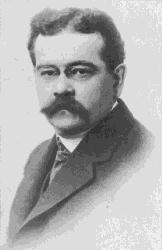 : Publisher New York, Copyright 1919, Horace Liveright, Inc. 1ʳᵉ édition, décembre 1919. 2de édition, février 1920. 3ᵉ édition, février 1931. Imprimé aux USA., 1919